

Planets in Transit: A Reflection on Connection
On Connection, Loss, and New Beginnings

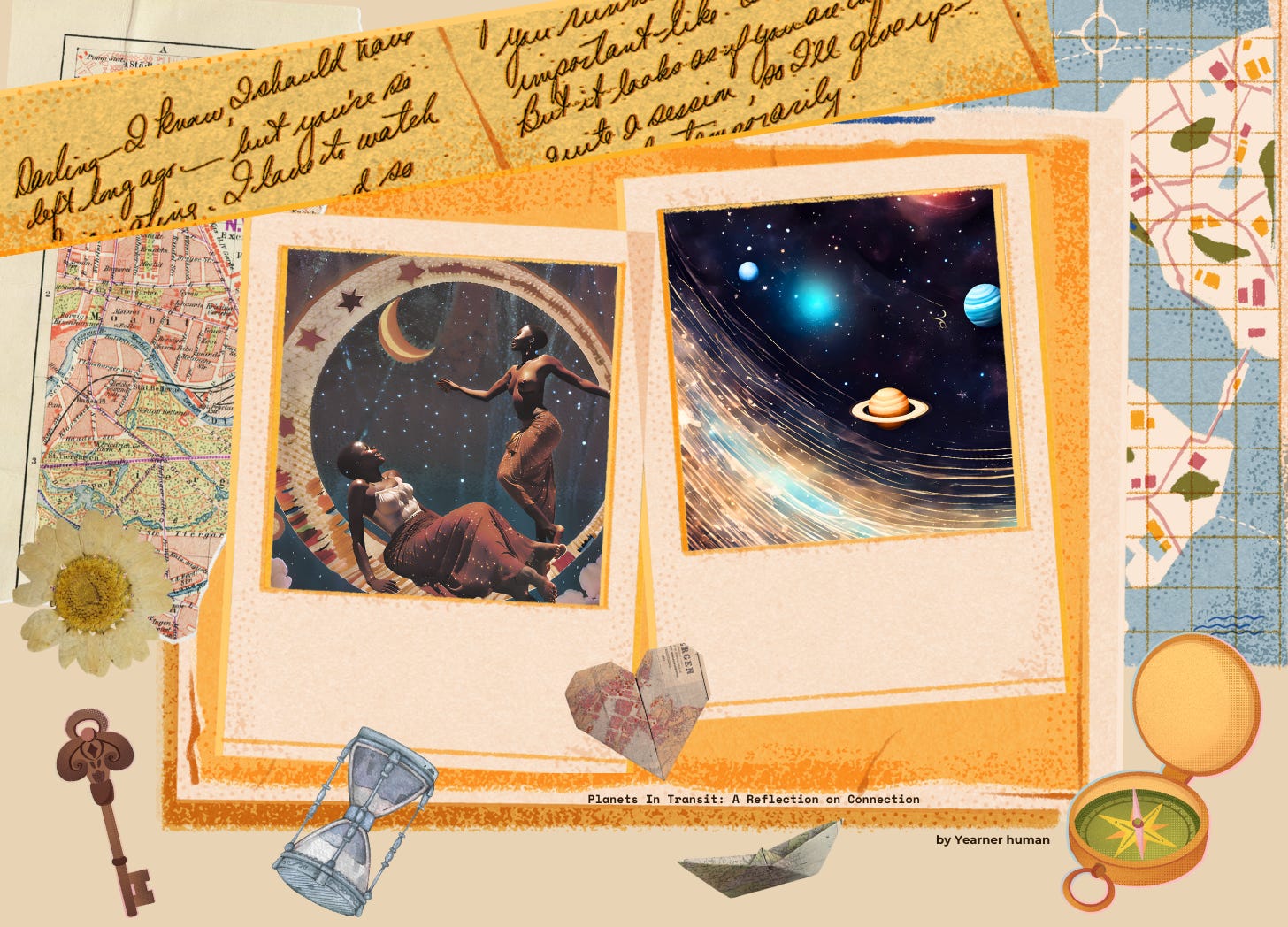
It never ceases to baffle me how friends/lovers can turn to strangers, the inevitable slow fade leaving you unfamiliar with the person they have become. We are like planets in transit, some days we are moving direct, others we are in retrograde. Just as these celestial bodies follow their own paths, so do we in our relationships. We go through different phases in life that ultimately change us.
We are just passengers
In Astrology, planets are believed to be in transit, a continuous motion in the sky, which can be likened to the ever-changing nature of human relationships. When planets go direct, their energies are clearly expressed and there is smooth sailing. This can be compared to a friendship where communication is open, and the two individuals understand each other well. When they are in retrograde, they are in a backward motion, therefore giving a reverse effect which might be uneasy to experience, leading to potential challenges and misunderstandings. Hence the jokes about Mercury retrograde are popular when things start becoming uneasy to deal with. Reflecting on how our lives mirror the movements of celestial bodies, this song kept playing in my mind. “We are just passengers”.
Our day to day interactions with the world feels like an endless journey. We are enroute to some place, we might define it for ourselves, we might even write it down on paper as we manifest our heart’s desires on a new moon night or in our prayers before we sleep and every morning when we wake up. Words from the utmost tender parts of our hearts— amalgamated by desire. Speaking life, with hope and a heightened spirit.
Time & Fated Connections
Time is really an interesting concept. I get lost in wonder when I look at my age and the ages of the people I become friends with: young and old. I remember telling a friend “It took me 25 yrs to meet you, and it took you almost 30yrs to meet me too!” It's strange to think of all the years we existed on the same planet, unaware of each other, before finally connecting. It makes you wonder how many other connections are out there, waiting for the right moment. This reminds me of ‘Maktub’ an Arabic word that translates to ‘it is written’— a reminder that there is a purpose to everything that happens, and that by following our hearts and pursuing our dreams, we are fulfilling our destinies. This idea of destiny and preordained paths is beautifully captured in Paulo Coelho's The Alchemist: “So, I love you because the entire universe conspired to help me find you.”
This yearning for deeper connection is often challenged by the realities of modern life. It hurts a little that we don’t have the luxury of time, to commune with our loved ones as often as we would love to. The life updates, though summarized and with some details inevitably forgotten, sustain us for now. My heart yearns for more. But in this demanding world—where bills must be paid and cities continue to grow—finding strength in the love we share amidst the pressures of daily life is essential. We must cherish every little moment with our kindred souls, remaining true to ourselves and the values that anchor us.
Autonomy & Solitude
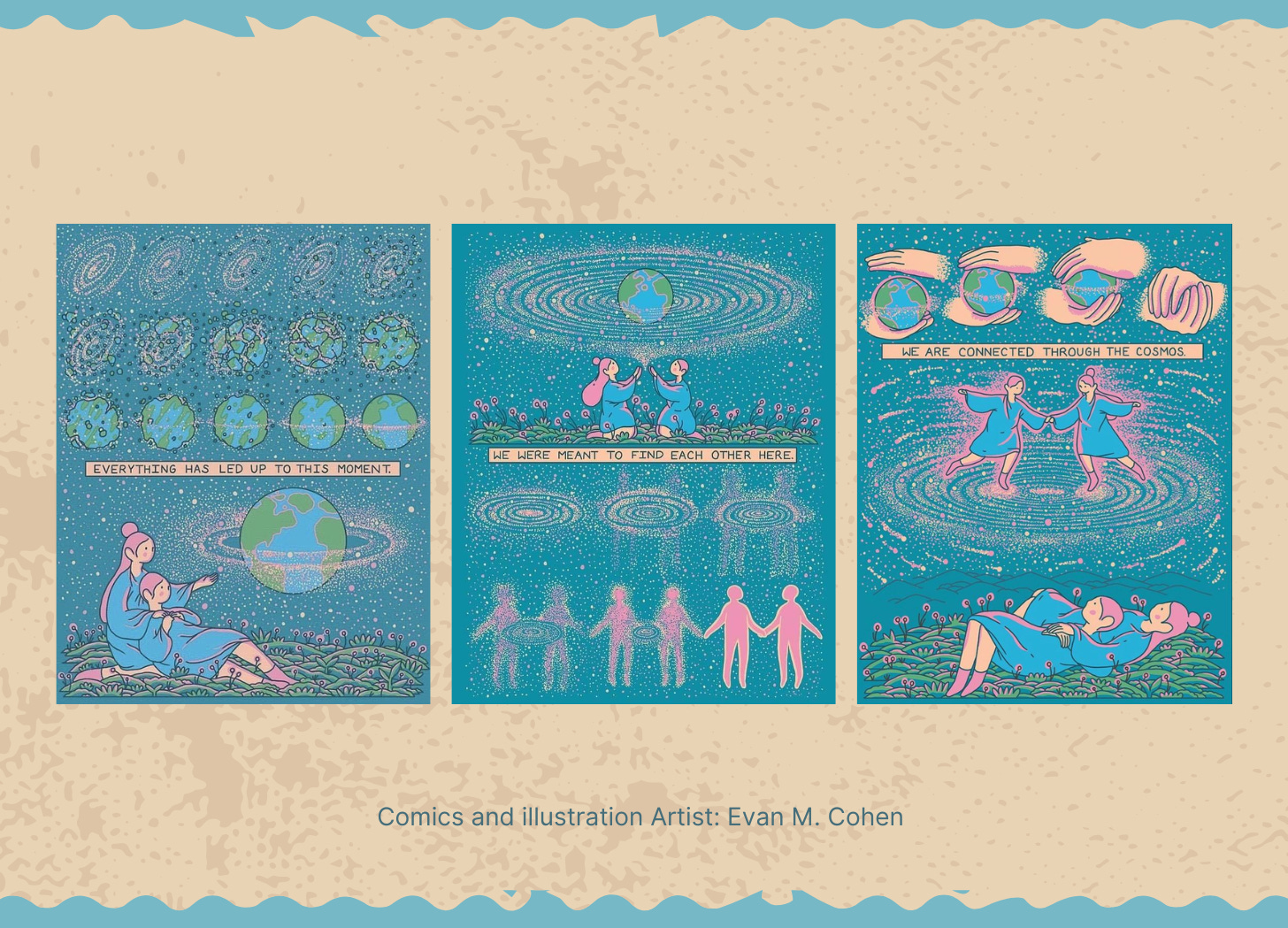
Given these challenges, it becomes even more important to cultivate a healthy relationship with ourselves and embrace the power of solitude. Pockets of space really play an important role in our lives. Our interactions with others, our work, and our engagement with the media we consume, can become draining and superficial. We need moments where we withdraw ourselves from indulgence, and dwell in our solitude, unbinding in rest and self reflection. Mindfulness keeps us in check and in tune with our being. This provides the grounding we need to benefit from these periods of withdrawal, ensuring that when we reconnect, we do so with fresh perspectives and renewed energy. Preventing the burnout and superficiality of constant, unreflective engagement.
Furthermore, being comfortable in solitude fosters a sense of autonomy. We get to decide when and how we want to connect with others. Within romantic partnerships, one thing I've noticed is the gradual detachment from their friendships, those that existed before their current romantic relationships. It's like their whole world becomes just the two of them, and that can actually make it harder for each person to feel like they have their own space. Therefore creating a dependence that can breed resentment, especially when power imbalances exist. Similarly, in some friend groups, the dominance of a few individuals can lead to other members feeling unheard, undervalued, and ultimately, less autonomous.
Progress Check-ins
Before ambivalence leads to gradual fading out in relationships, we can address the issues at hand. How? I recently began having progress check-ins with my loved ones, preparing a series of questions to express my concerns and have honest heart-to-heart conversations about these connections. For example, I might ask, 'Have you felt like we've been connecting as deeply lately?' or 'Is there anything I can do to better support you?', ‘What should we explore more of, and what no longer works in our interactions?’ This may be a new experience for many of us, but it’s something that would help bring clarity and closure, and can inspire growth and strengthen bonds. These check-ins provide a valuable opportunity to address challenging emotions such as envy, detachment, and ambivalence, contributing to the long-term health and well-being of our relationships.
Processing Endings
The ending of a relationship can take many forms: mutual decisions to separate, one partner ending things (dumping), gradual fading out, abrupt endings, dramatic confrontations, and the slow process of growing apart. The degree of communication, emotional intensity, and sense of closure varies depending on the ending itself. I always advocate for beautiful endings, or rather less chaotic endings. Those that allow us to have conversations on the need to end an interaction and the processes that follow. This involves setting boundaries and mutually finding a common ground for a healthy transition to a different type of relationship. This is only if you want to keep the connection, but redirect it from its existing form to another. For example, pursuing a business partnership or a platonic interaction after the ending a romantic relationship. While maintaining some form of connection can be beneficial, it's also important to recognize that sometimes complete separation is necessary for healing and growth.


Reality check: Navigating Post-Breakup Dynamics
Sometimes it is as clear as day that some interactions have run their course and we have to part ways. Other times the hope still lingers, that something can be salvaged. Particularly when a romantic interaction ends and both parties desperately cling to the frail thread of a platonic connection. This attempt at a platonic connection often feels like a temporary fix, a band-aid on a wound that needs serious attention. The fear of losing the connection entirely, coupled with the awkwardness and emotional vulnerability of navigating this new dynamic, can make it a truly terrifying and emotionally taxing position. This longing for connection can sometimes manifest in other ways as well. Sometimes I develop such strong feelings for someone that I begin a romantic relationship with them in my mind, despite facing rejection. I understand this feeling of longing all too well, much like Bob Marley's themes of unrequited love and waiting in vain. If wishes were horses, beggars would still be hungry and I would still be left yearning.
This struggle to move on and the fear of never fully recovering from a breakup is something many artists explore. In my song, you can no longer/where you are (from my debut EP clrdsncs vol i) , I explored the challenging reality of existing in shared spaces with someone you were once close to while still processing heartbreak and healing. Similarly, Gabbie’s song ‘Clock’ with the lyrics “...how did you go from lying right beside me, to a picture in my phone, how can I say, I’m secretly terrified we’ll never be okay” captures the essence of this fear of never being okay again after a breakup. Many factors come into play, including emotional attachments, shared memories, and social pressures. How do you navigate these situations and maintain your sense of self without feeling intimidated or conflicted?
Spaces that once held joy and a sense of wholeness with this person now feel new and daunting. It takes time and healing to feel comfortable in these environments again. It's perfectly acceptable to withdraw from such interactions until you feel ready to reconnect—or to choose not to at all. Sometimes the completion/ending of one connection begets a ripple effect that affects all other connections that stemmed from it, including friendships and acquaintances, leaving us to grapple with the complex and often unforeseen consequences of lost connection.
This cycle of endings and beginnings is a universal human experience, something Hozier captures beautifully in “All Things End” from his album Unreal Unearth: Unending:
“And all things end
All that we intend is built on sand
Slips right through our hands
And just knowin' that everything will end
Won't change our plans when we begin again”
He reminds us that through accepting the inevitability of endings we prepare ourselves for new beginnings. Embracing acceptance and self-reflection allows us to process our hurt and heal. We chart a new path as we re-engage with the world, seeking connection and building new relationships. Ultimately, navigating the complexities of human connection—the joys of finding kindred spirits, the pain of loss, and the ongoing journey of self-discovery—is an integral part of the human experience. It is within these experiences, both the beautiful and the painful, that we truly learn and grow.